




Modern businesses are under increasing pressure to deliver software faster, maintain application stability, and scale digital infrastructure without disrupting user experience.
In today's competitive digital economy, delayed deployments, infrastructure bottlenecks, and inefficient release cycles can directly impact customer satisfaction, operational agility, and business growth.
This is one of the key reasons why DevOps has rapidly evolved from a technical engineering practice into a broader business scalability strategy.
As cloud adoption accelerates and software ecosystems become more complex, enterprises are increasingly investing in DevOps services to automate infrastructure, improve deployment consistency, accelerate software delivery, and strengthen operational resilience.
Organizations that once relied on slow, disconnected development workflows are now prioritizing automation, cloud-native infrastructure automation, and continuous delivery models to remain competitive in fast-moving markets.
Why Are Businesses Prioritizing DevOps in 2026?
One of the biggest operational challenges businesses face today is balancing software delivery speed with infrastructure stability and long-term scalability.
Traditional software delivery models often create communication gaps between:
development teams
testing environments
infrastructure management
deployment operations
As applications scale, these disconnected workflows can lead to:
 delayed releases
- inconsistent deployments
- operational inefficiencies
- increased downtime risks
DevOps helps organizations solve these problems by creating a more collaborative and automated software delivery ecosystem.
Modern businesses are increasingly adopting DevOps practices to:
- automate repetitive infrastructure tasks
- improve deployment reliability
- reduce manual operational errors
- accelerate release cycles
- improve engineering productivity
Many enterprises now view DevOps not simply as an IT initiative, but as a long-term operational transformation strategy capable of improving business scalability and innovation speed.
How CI/CD Pipelines Are Transforming Modern Software Delivery
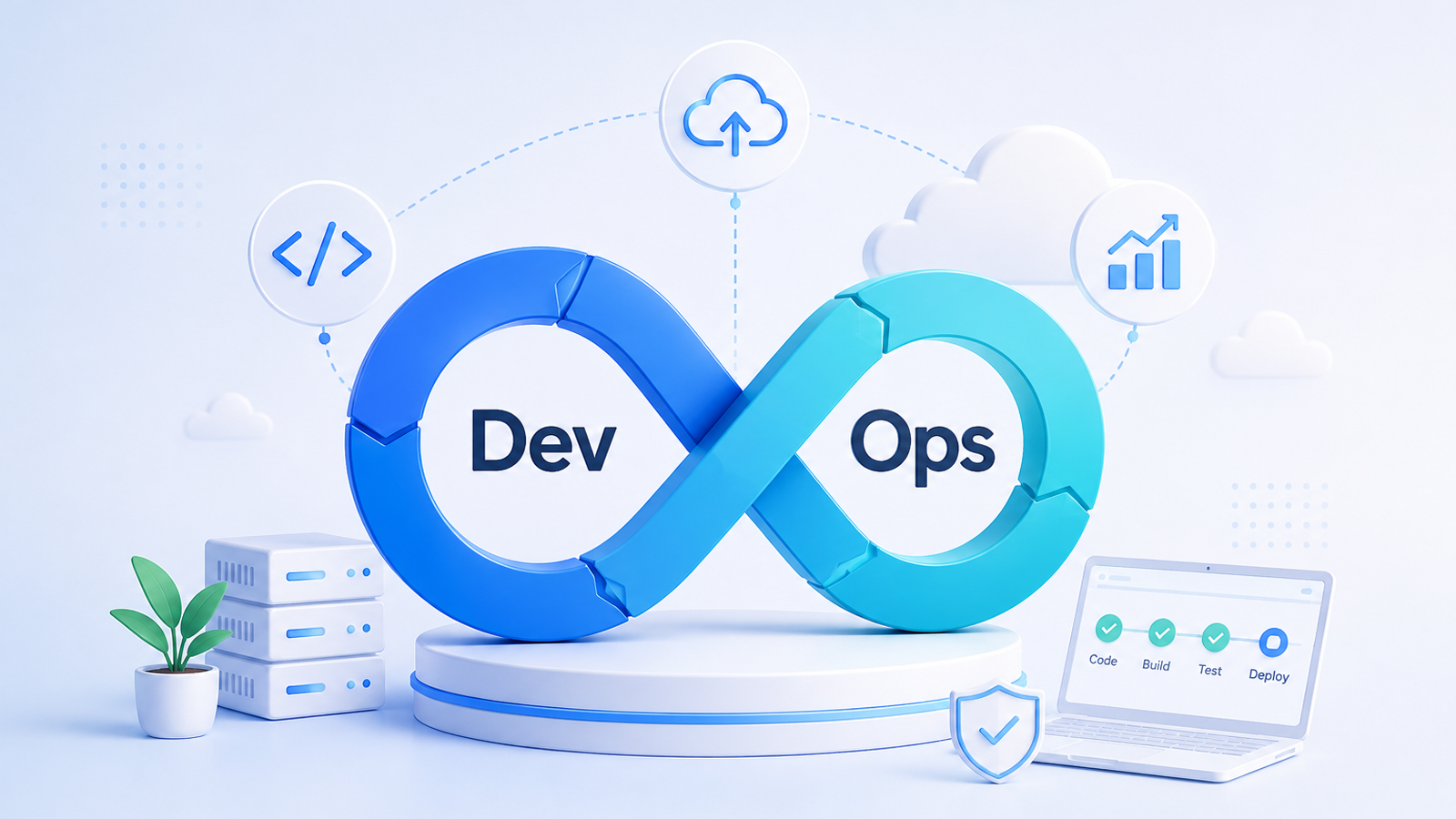
CI/CD (Continuous Integration and Continuous Deployment) has become one of the most important pillars of modern software engineering.
Instead of waiting weeks or months for large software releases, businesses can now continuously:
Continuously
- integrate code
- automate testing
- identify issues earlier
- deploy updates incrementally
This significantly improves
- deployment reliability
- release consistency
- operational agility
- customer experience
For example, many SaaS platforms now deploy multiple feature updates weekly using automated CI/CD pipelines while maintaining application stability and minimizing downtime for end users.
This shift has dramatically changed how modern businesses approach software delivery.
Organizations implementing scalable cloud-native applications increasingly work with experienced teams offering modern DevOps consulting solutions capable of aligning automation, infrastructure scalability, and deployment efficiency into a unified engineering strategy.
Why Cloud-Native Infrastructure Is Accelerating DevOps Adoption
Cloud-native infrastructure has become one of the biggest drivers behind global DevOps adoption.
As businesses migrate toward:
- cloud platforms
- distributed applications
- containerized systems
- scalable SaaS ecosystems
traditional infrastructure management models are becoming increasingly difficult to maintain.
Modern DevOps environments now heavily rely on technologies such as:
- Kubernetes
- Docker
- Infrastructure as Code (IaC)
- automated orchestration tools
- real-time monitoring systems
However, many businesses initially underestimate the operational complexity involved in managing cloud-native applications at scale.
Without structured DevOps implementation, organizations often encounter:
- deployment inconsistencies
- infrastructure instability
- scaling limitations
- slower release cycles
This is why enterprises are increasingly investing in scalable DevOps services focused on automation, infrastructure optimization, cloud engineering, and long-term operational efficiency.
How DevOps Improves Business Scalability and Operational Efficiency
One of the biggest misconceptions about DevOps is that it only benefits software engineering teams.
In reality, DevOps directly impacts broader business performance.
Organizations with mature DevOps workflows often experience improvements in:
One common challenge fast-growing businesses face is managing software complexity across multiple products, teams, and cloud environments.
As systems expand, manual deployment processes and fragmented infrastructure management often become unsustainable.
DevOps helps businesses automate operational workflows while improving:
- infrastructure consistency
- monitoring
- disaster recovery preparedness
- system reliability
- software delivery speed
This becomes especially important for:
- enterprise SaaS platforms
- fintech products
- healthcare systems
- AI-powered applications
- cloud-based enterprise ecosystems
At Aquarious Technology, we've observed that businesses adopting structured DevOps workflows often gain better operational visibility and faster release confidence as software ecosystems become more complex.
Why Deployment Automation Has Become a Competitive Business Advantage
Modern businesses can no longer afford slow deployment cycles and infrastructure inefficiencies.
In highly competitive industries, delayed releases often impact:
- customer retention
- product innovation
- operational responsiveness
- market adaptability
Deployment automation allows organizations to:
- release software faster
- reduce infrastructure risks
- improve testing reliability
- maintain operational consistency
- accelerate innovation cycles
Businesses that automate deployment workflows can often respond to customer needs significantly faster than organizations still relying on manual release management processes.
This is one reason why deployment automation is increasingly viewed as a business growth enabler rather than only a technical optimization practice.
Why Indian Technology Companies Are Becoming Trusted DevOps Partners
India has rapidly emerged as a global hub for cloud engineering, DevOps transformation, and enterprise software modernization.
Businesses worldwide increasingly partner with Indian technology companies because of:
- strong cloud engineering expertise
- scalable development capabilities
- infrastructure automation experience
- cost-efficient delivery models
- growing enterprise transformation expertise
Cities like Kolkata, Bengaluru, Pune, and Hyderabad continue expanding as major technology ecosystems supporting global digital transformation initiatives.
Organizations seeking scalable infrastructure modernization and software delivery optimization are increasingly collaborating with experienced firms like Aquarious Technology for long-term DevOps transformation strategies.
Frequently Asked Questions
DevOps services help businesses automate software development, infrastructure management, testing, deployment workflows, and cloud operations to improve scalability, reliability, and software delivery speed.
DevOps helps businesses improve operational efficiency, accelerate software delivery, automate infrastructure processes, reduce deployment risks, and scale digital applications more effectively.
CI/CD stands for Continuous Integration and Continuous Deployment. It enables businesses to automate code integration, testing, and deployment processes for faster and more reliable software releases.
DevOps supports cloud-native applications through automation, container orchestration, infrastructure monitoring, deployment optimization, and scalable cloud infrastructure management.
Yes. Startups often benefit from DevOps consulting solutions because they help improve deployment speed, operational scalability, infrastructure automation, and product delivery efficiency from an early stage.
Industries such as SaaS, fintech, healthcare, logistics, eCommerce, AI platforms, and enterprise software businesses benefit significantly from DevOps because of their need for scalability and continuous software delivery.
Final Thoughts
Modern software delivery is no longer only about writing functional code.
Businesses today require scalable infrastructure, automated deployment workflows, operational visibility, cloud-native engineering, and continuous delivery systems to remain competitive in increasingly digital markets.
DevOps has evolved into a critical operational framework that supports:
- faster innovation
- infrastructure scalability
- deployment reliability
- long-term business agility
Organizations that fail to modernize deployment workflows and infrastructure automation today may struggle to compete effectively in fast-moving digital environments tomorrow.
As software ecosystems continue becoming more complex, businesses that invest early in scalable DevOps transformation strategies will be significantly better positioned to innovate, adapt, and grow sustainably in the years ahead.
Planning a DevOps transformation?
Explore how Aquarious Technology supports automation, cloud engineering, and long-term software delivery efficiency.