
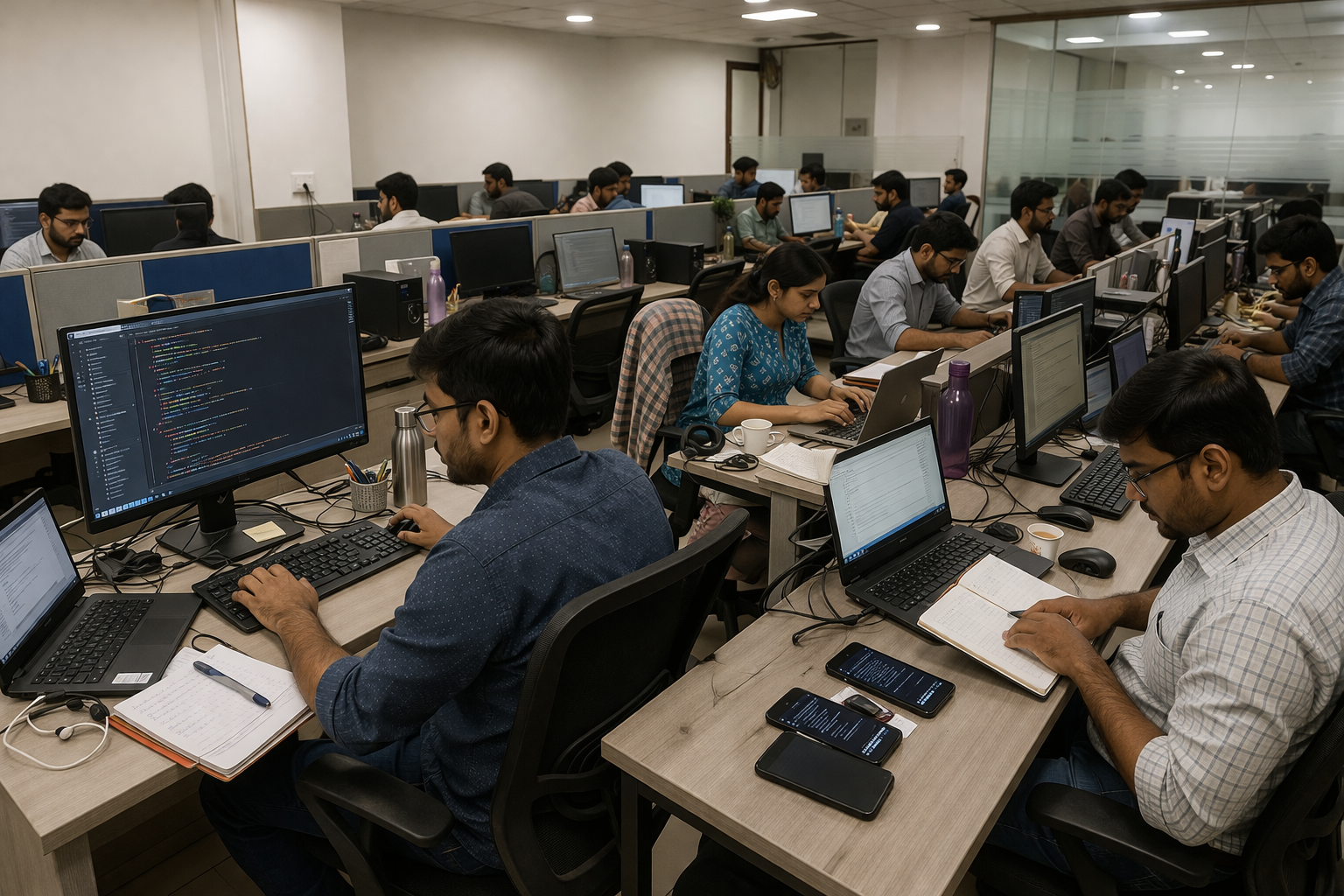

Bring cases together
Create a consistent registry across participating hospitals while preserving the context of each clinical case.

WBOA brings patient registration, clinical classification, treatment and follow-up into one purposeful web platform for the West Bengal orthopaedic community.
Explore project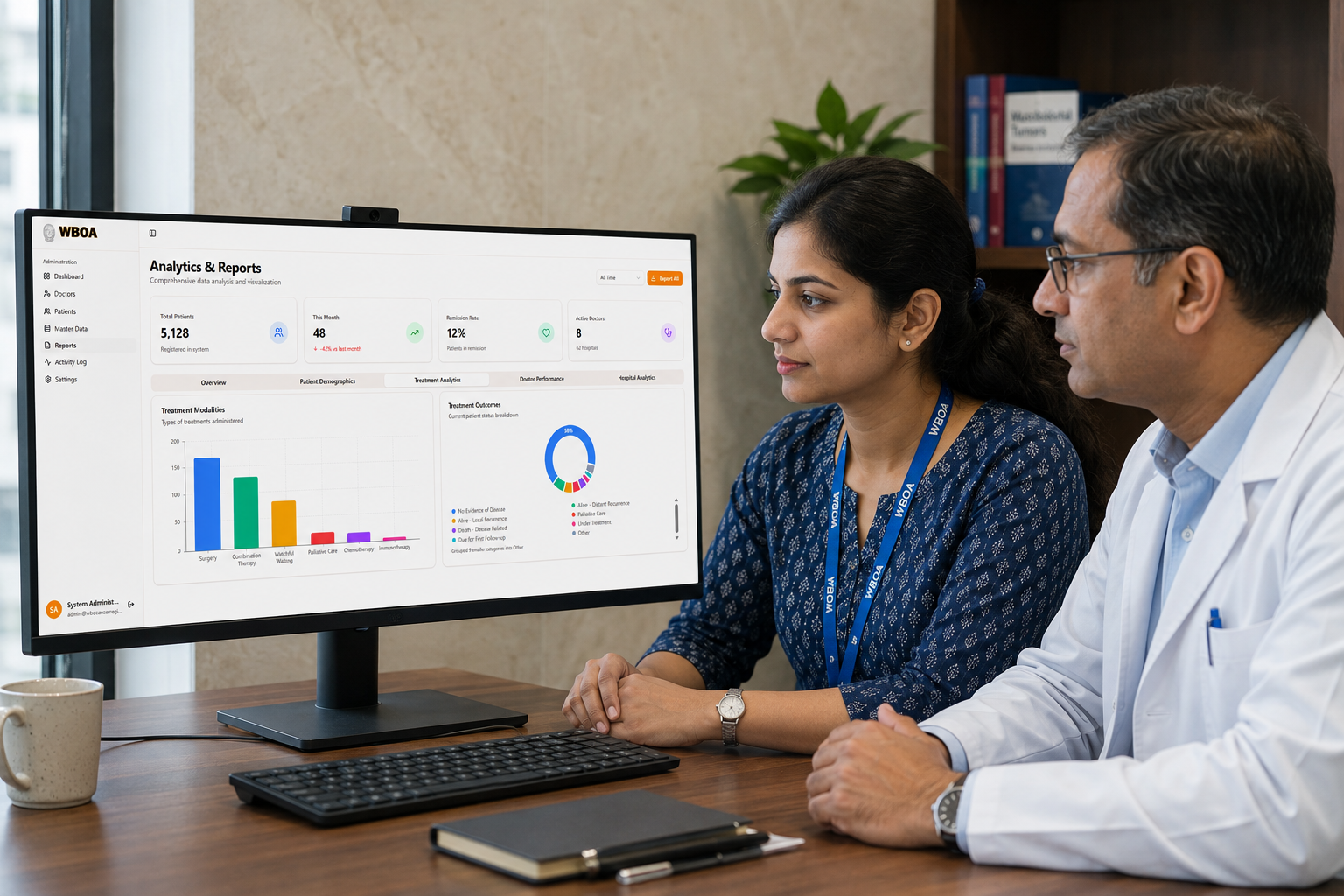
Established in 1976, the West Bengal Bone Tumor Registry has long represented a shared commitment to better understanding bone tumours. The digital platform brings that commitment into a structured, connected working environment.
Clinicians can manage individual clinical journeys while registry teams govern the wider dataset—supporting documentation, verification, follow-up and aggregated insight across participating hospitals.
Create a consistent registry across participating hospitals while preserving the context of each clinical case.
Connect diagnosis and treatment with follow-up and outcomes, so the record continues beyond registration.
Surface missing information, pending verification and overdue follow-ups for the people responsible.
Make cohort patterns useful to clinicians and the wider community through privacy-conscious analytics.
The platform had to support the realities of multi-hospital clinical work while keeping the registry dependable for its longer research purpose.
Individual cases held across doctors and institutions make it difficult to compare tumour patterns, presentation and treatment across the wider registry.
A useful tumour registry must capture what happens next. Follow-up and changing clinical status need to remain attached to the original record.
Missing staging information and unverified records cannot simply disappear into a dashboard. They need a clear path to review and correction.
The public view needs meaningful statistics without exposing individuals, especially when a rare condition creates a very small cohort.
 Patient records organised around the continuing clinical journeyVisibility of treatment status and patients requiring follow-upRegistry insights across tumour groups, stage, age and gender
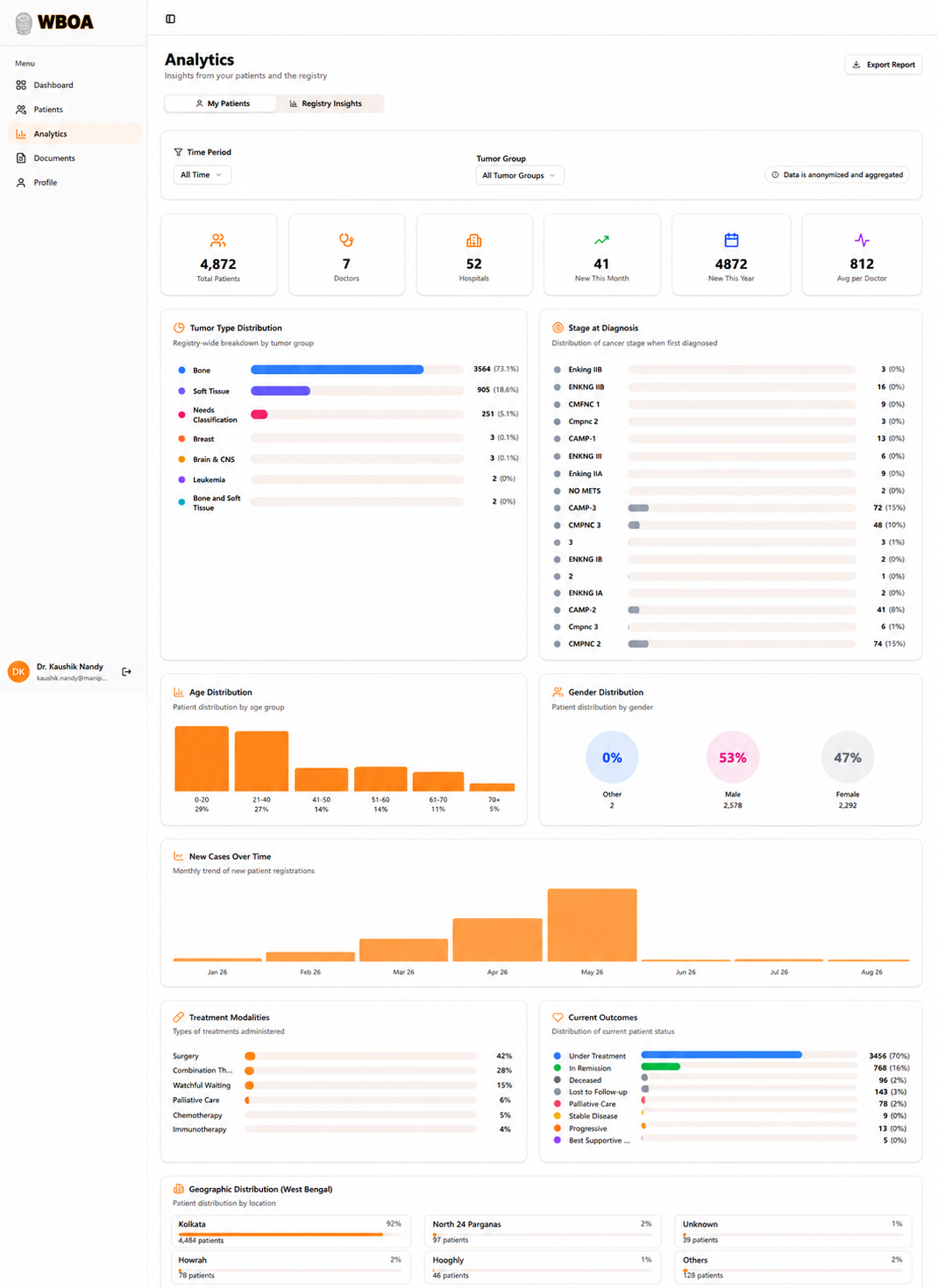 Review doctor applications and records awaiting verificationSurface missing information and overdue follow-up alertsTrack activity and explore registry-wide reporting
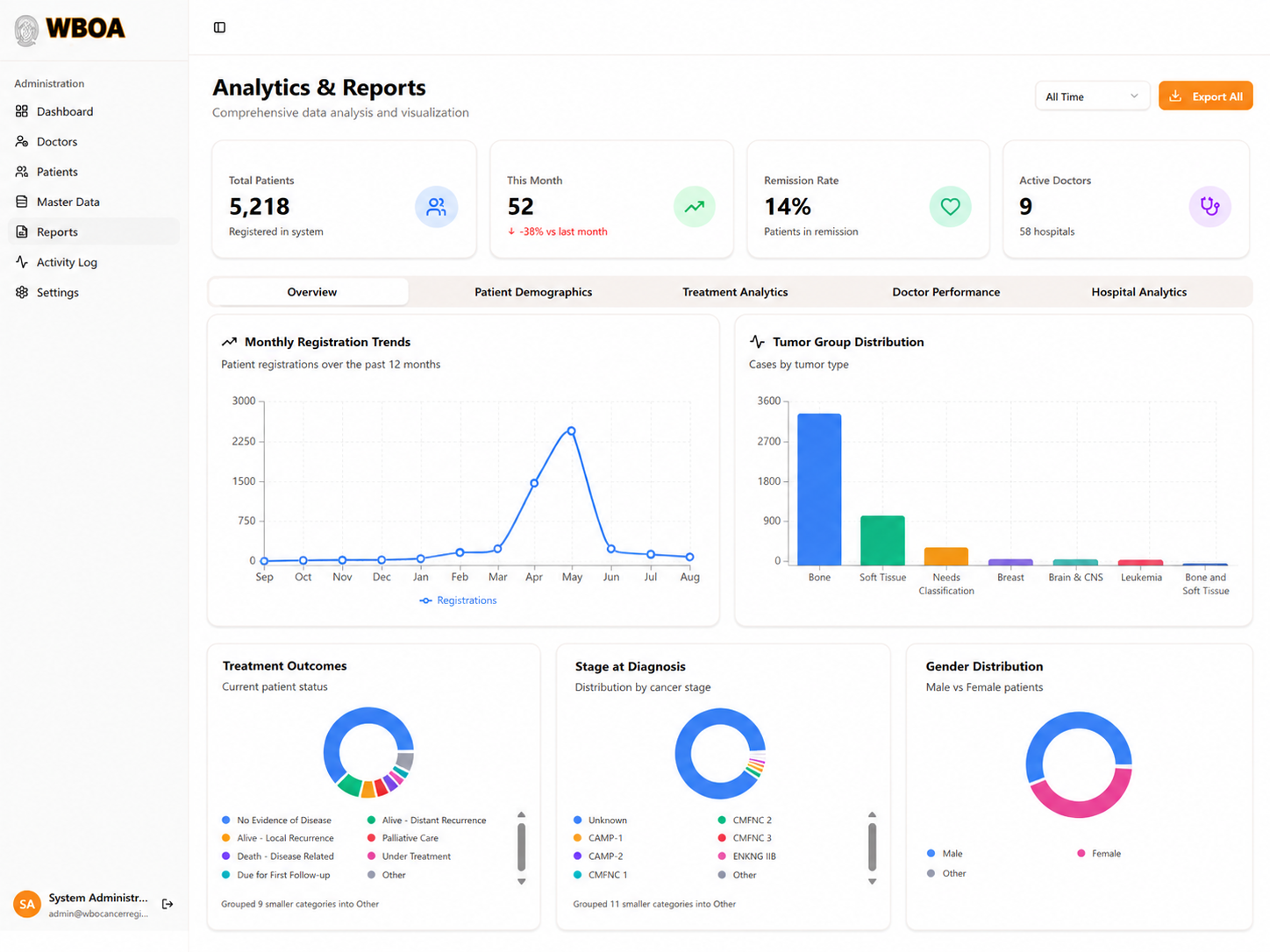 Compare treatment modalities and recorded patient outcomesExplore age, gender and geographic distributionReview stage at diagnosis and registration trends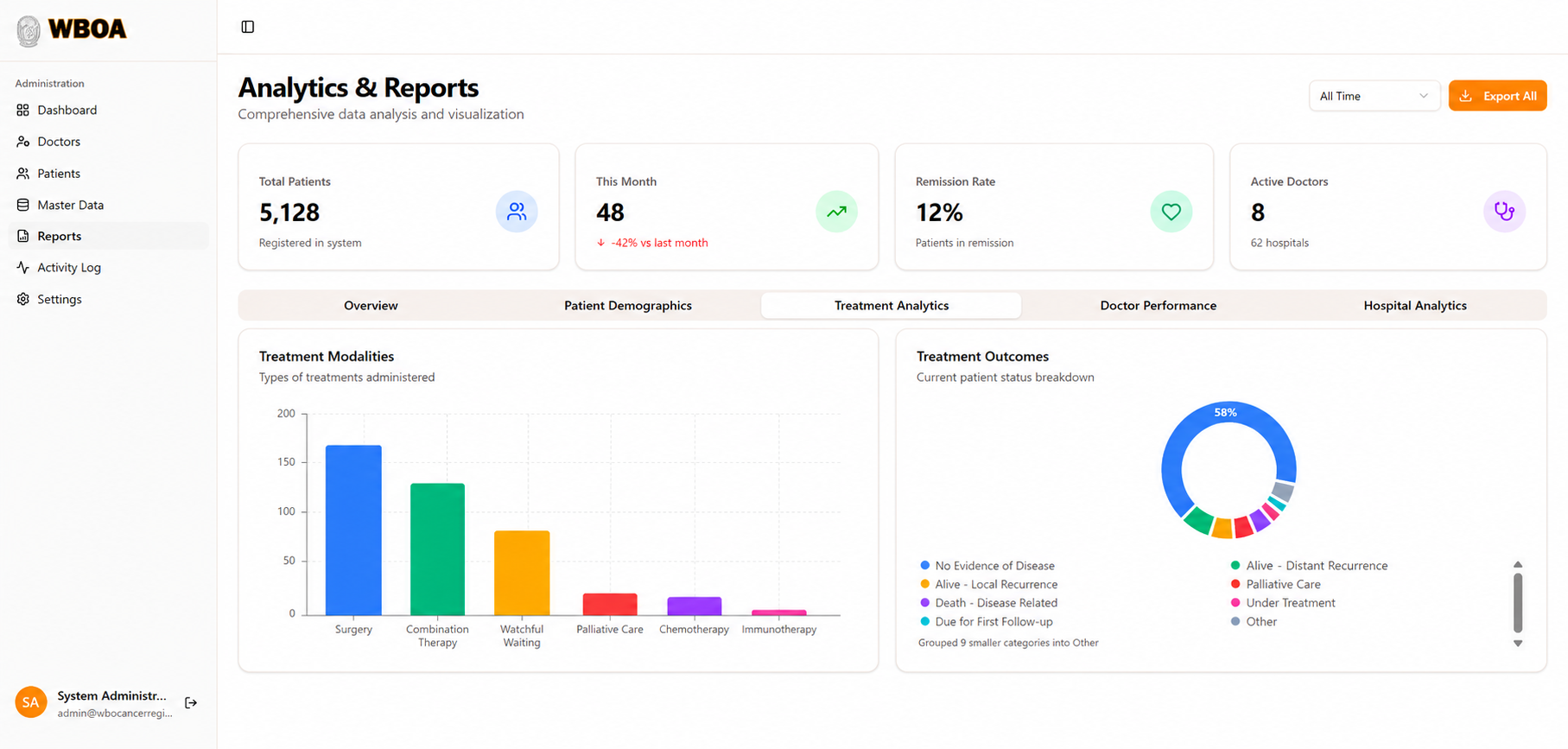
WBOA moved the work of capturing, reviewing and understanding cases into a single registry environment—built to grow through continued clinical contribution.
A documented, structured clinical dataset.
Participation visible in one shared registry.
Clinical cases available for cohort-level understanding.
A distinct group retained within the registry context.
Documented registry scale from the project case study. These are registry records, not clinical outcome claims.
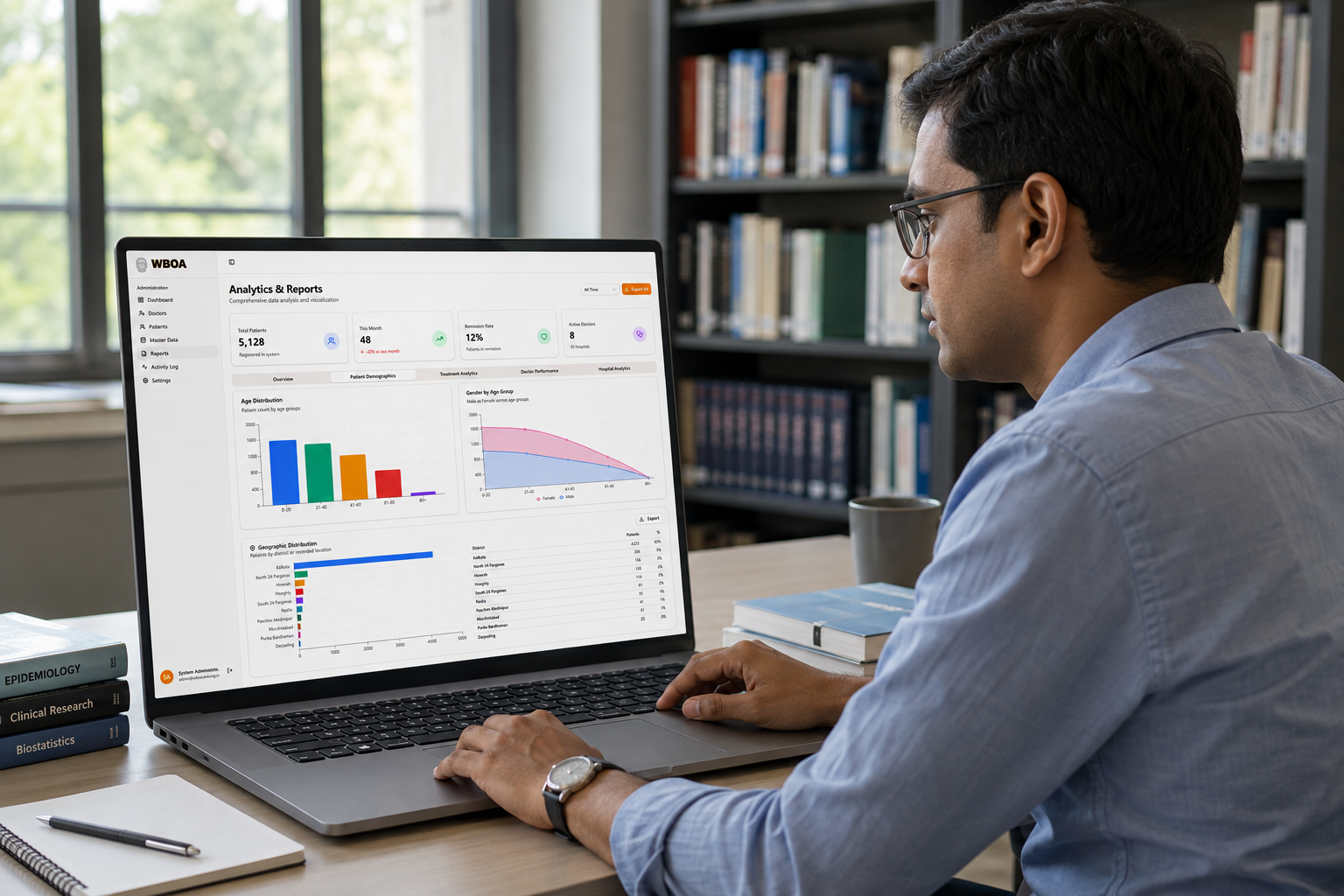
Registration, treatment, follow-up and recorded outcomes remain part of one longer clinical narrative.
Verification queues, activity visibility and missing-data work make quality a managed responsibility.
Aggregated reporting enables useful public understanding without exposing identifiable patient data.
 Next.js
 React
React Node.js
 PostgreSQL
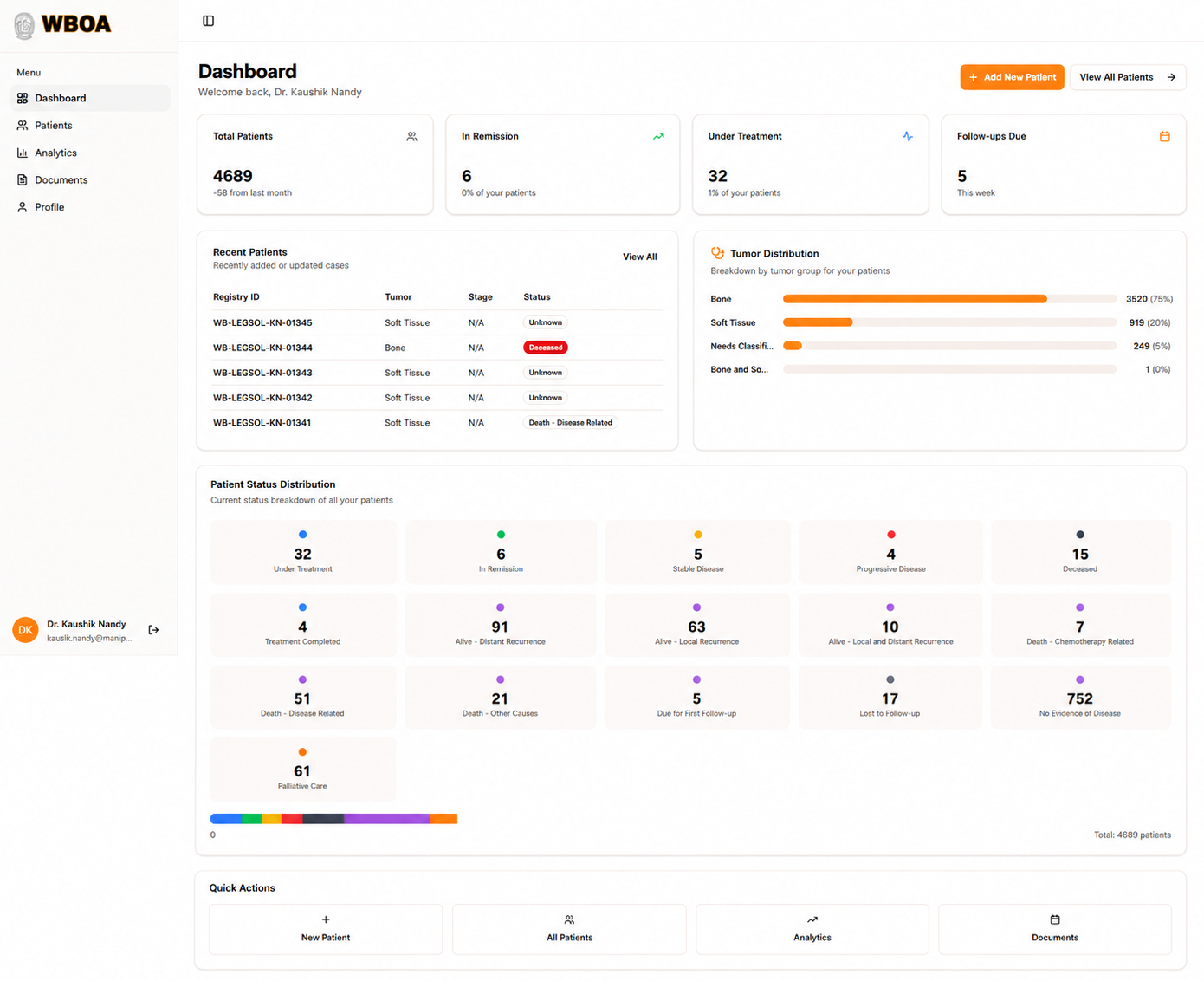 Use consistent tumour groups so records from participating hospitals can be understood together.Keep incomplete classifications visible within review workflows instead of forcing an incorrect category.Connect diagnosis, treatment, follow-up and recorded outcomes to one continuing clinical story.Make treatment status and follow-up part of the same record, rather than a separate hand-off.Retain changing states such as under treatment, remission, recurrence and progressive disease.Give clinicians a focused workspace for their own patients alongside anonymised registry insight.Surface missing clinical information, pending verification and overdue follow-ups for review.Keep doctor applications and recent record activity visible to registry administrators.Make the work needed to improve the dataset clear and traceable over time.Separate role-aware clinical workspaces from the governance and reporting environment.Aggregate and anonymise public statistics before they are made available for research insight.Protect small cohorts through grouping, limited date granularity and no raw patient-data download.
We bring clinical workflow, structured data and thoughtful digital experience together for organisations doing consequential work.
Let's get started