
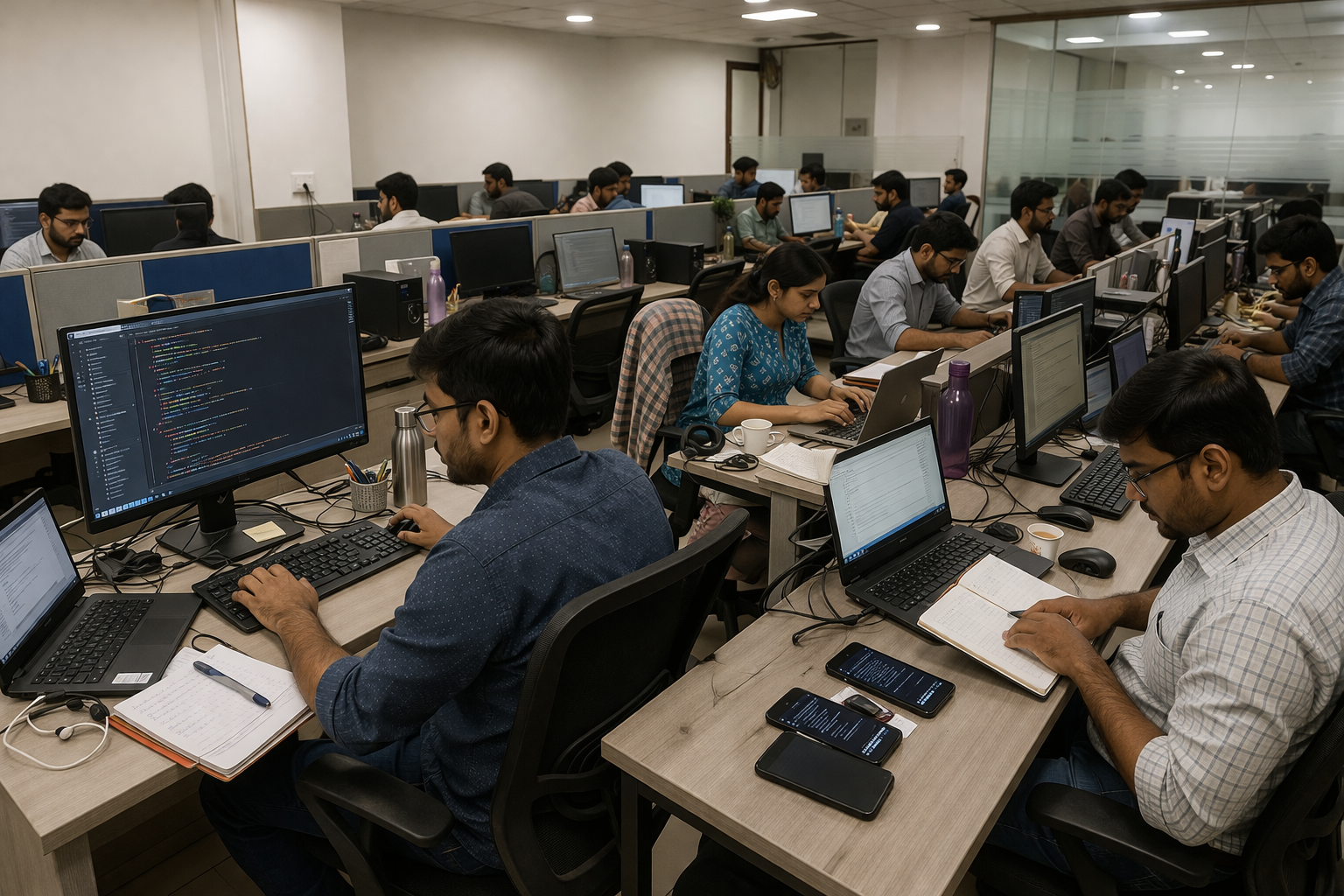



A longitudinal clinical story
Patient, diagnosis, tumour classification, treatment, follow-up and outcome remain connected in one usable record.

A privacy-conscious clinical platform for the West Bengal Bone Tumor Registry—bringing structured patient data, follow-up, quality controls and responsibly aggregated intelligence into one connected experience.
45
Participating hospitals
3,538+
Bone tumour cases
1976
Clinical heritage since
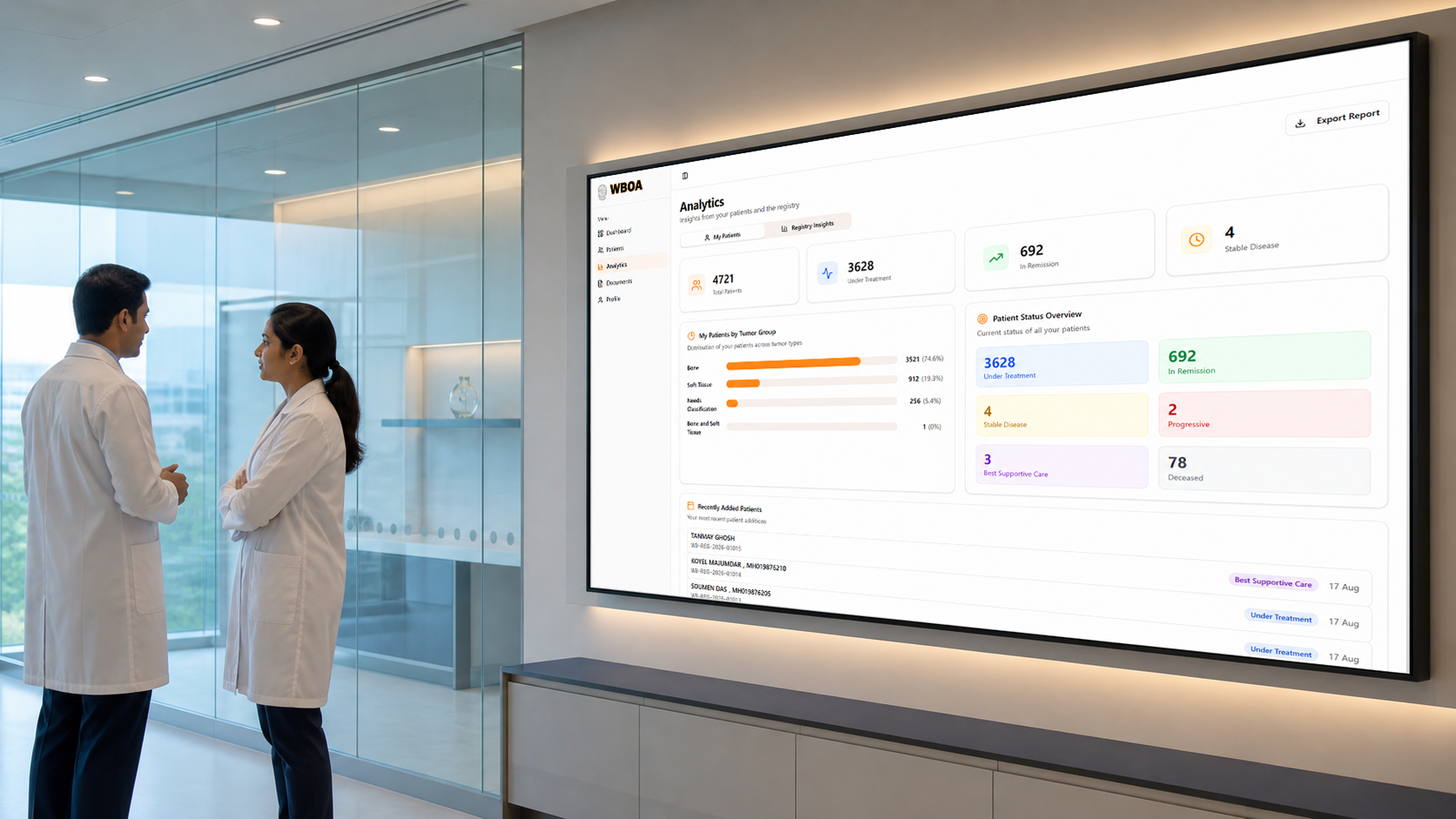

The West Bengal Orthopaedic Association's Bone Tumor Registry carries a clinical heritage that began in 1976. The new platform turns that legacy into an organised, privacy-conscious digital registry for structured patient records, follow-up and long-term clinical learning.
Its two connected portals serve distinct needs: clinicians can manage their own patient journeys, while administrators can guide participation, monitor quality signals and understand aggregate patterns across the registry.
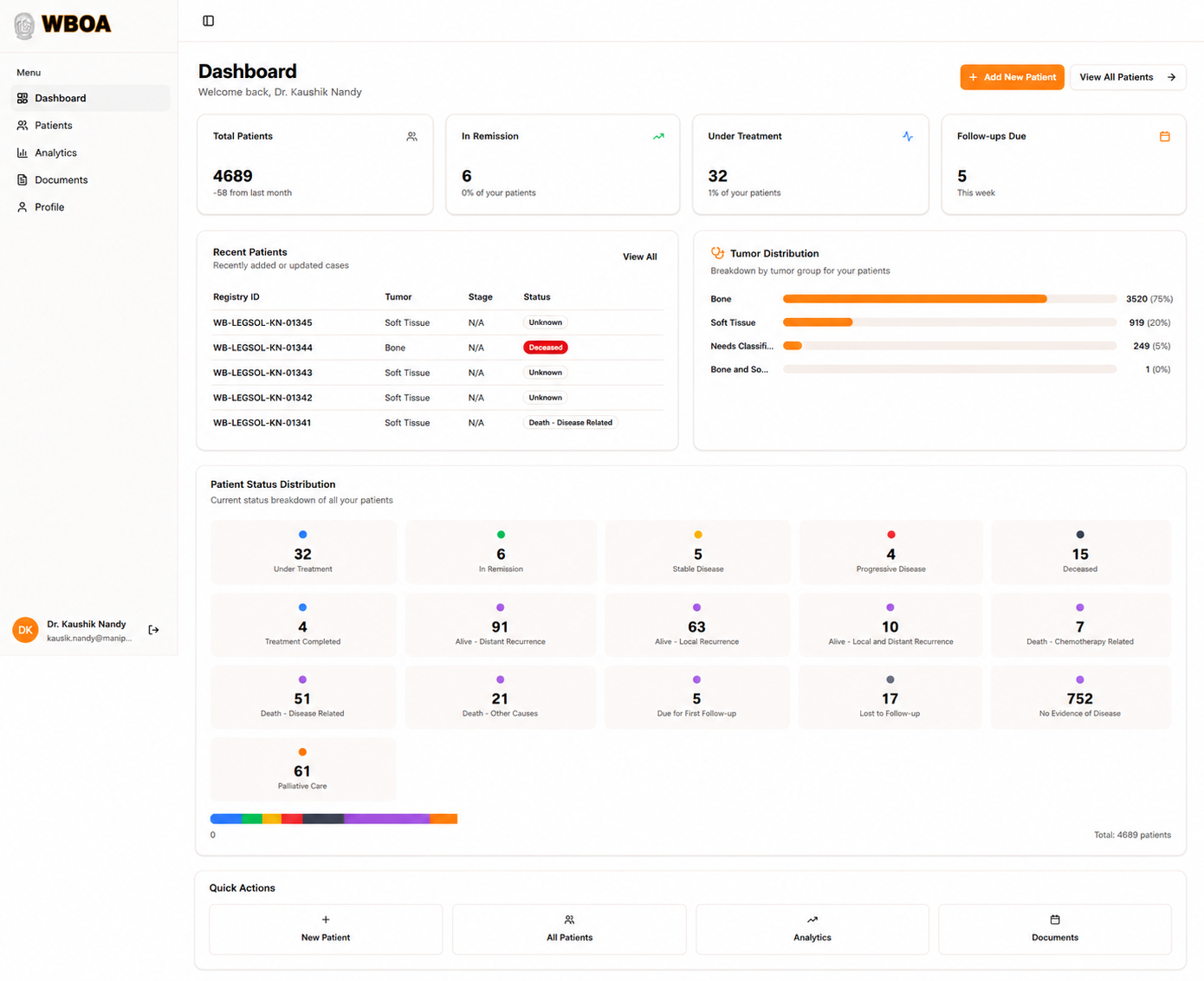
Doctor portal
A focused view of a clinician's own patient registry and follow-up work.
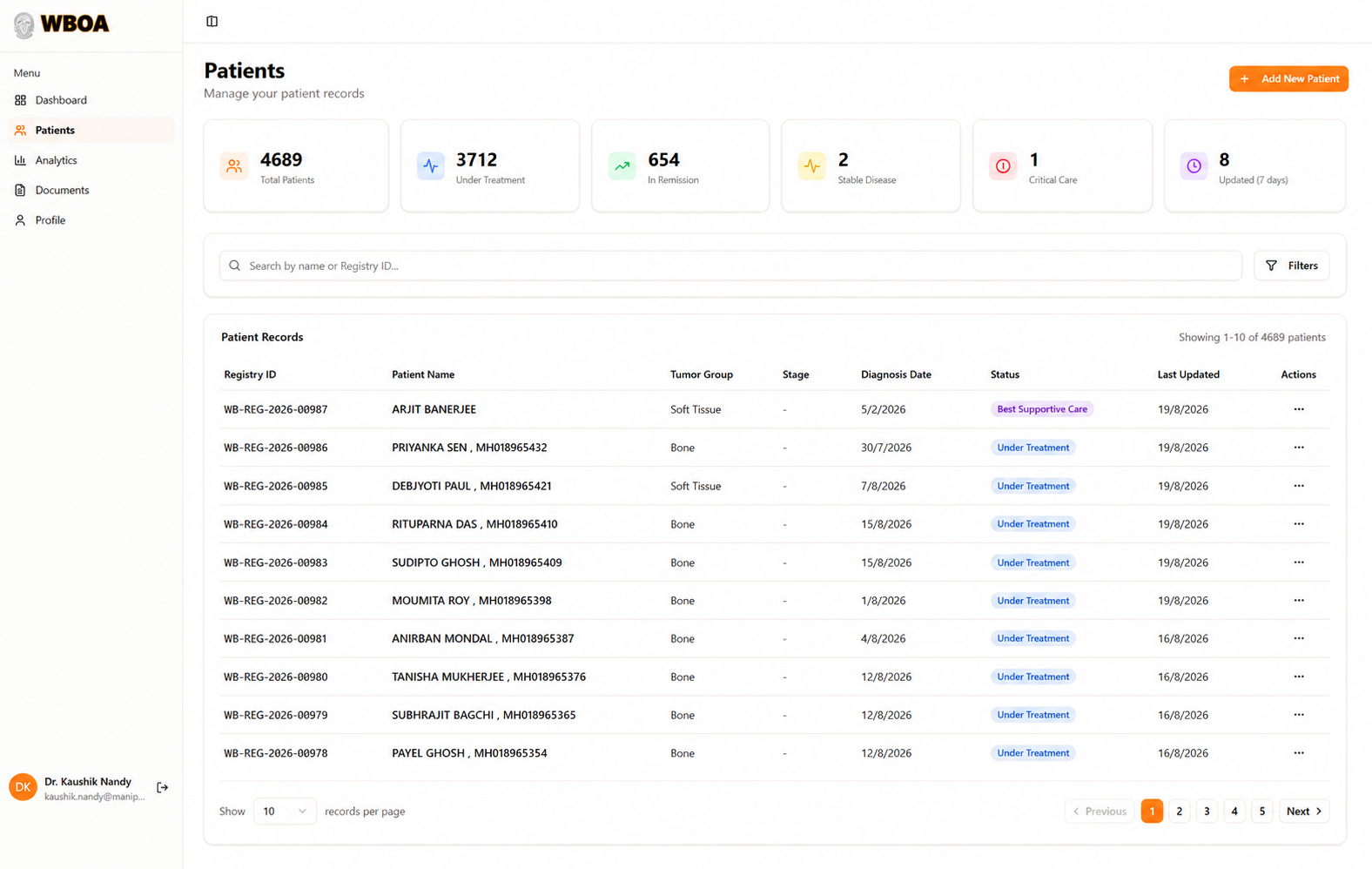
Doctor portal
Structured patient records designed for day-to-day clinical continuity.
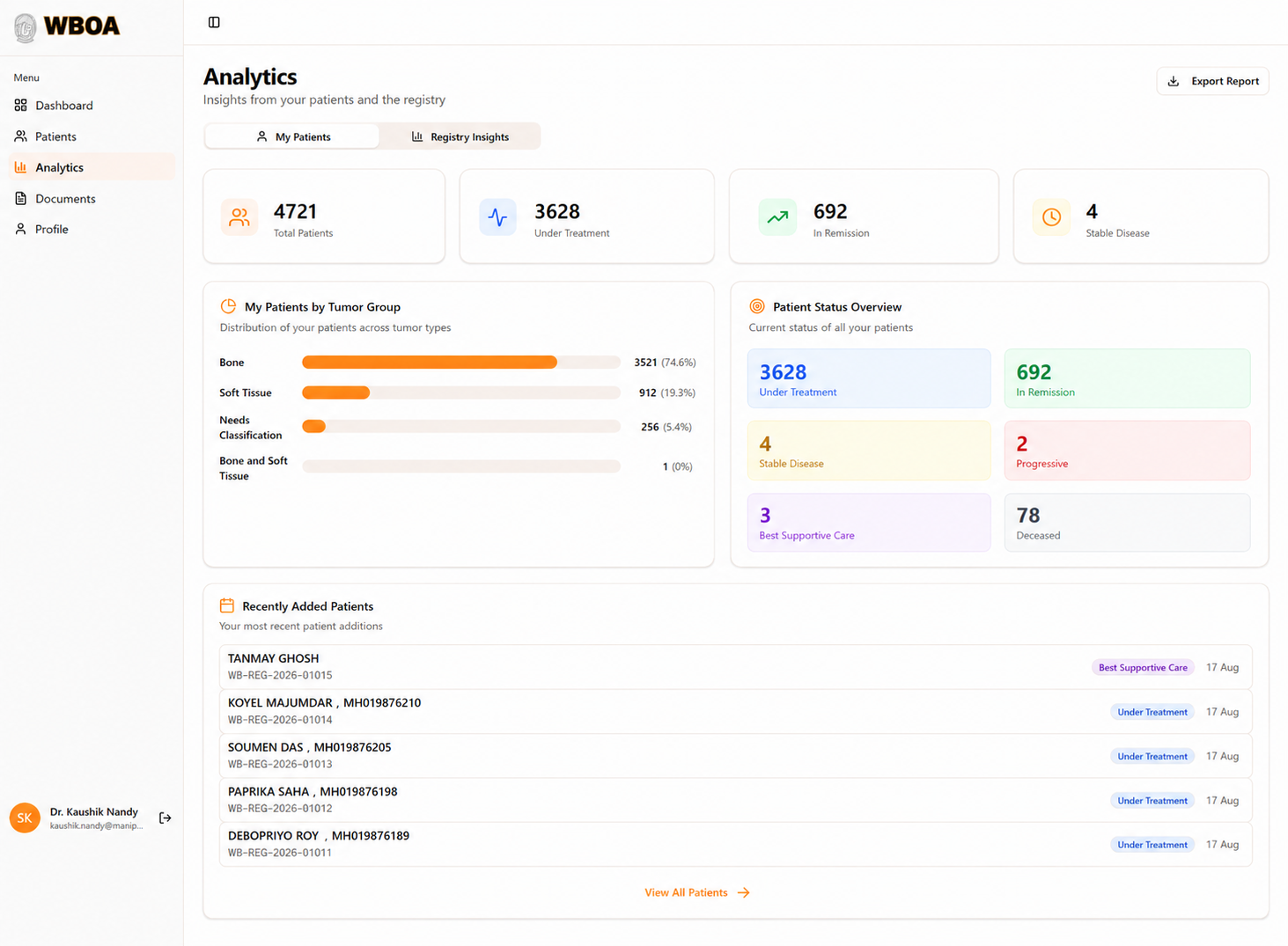
Doctor portal
A clinician-facing view of diagnosis and treatment patterns across their registry work.
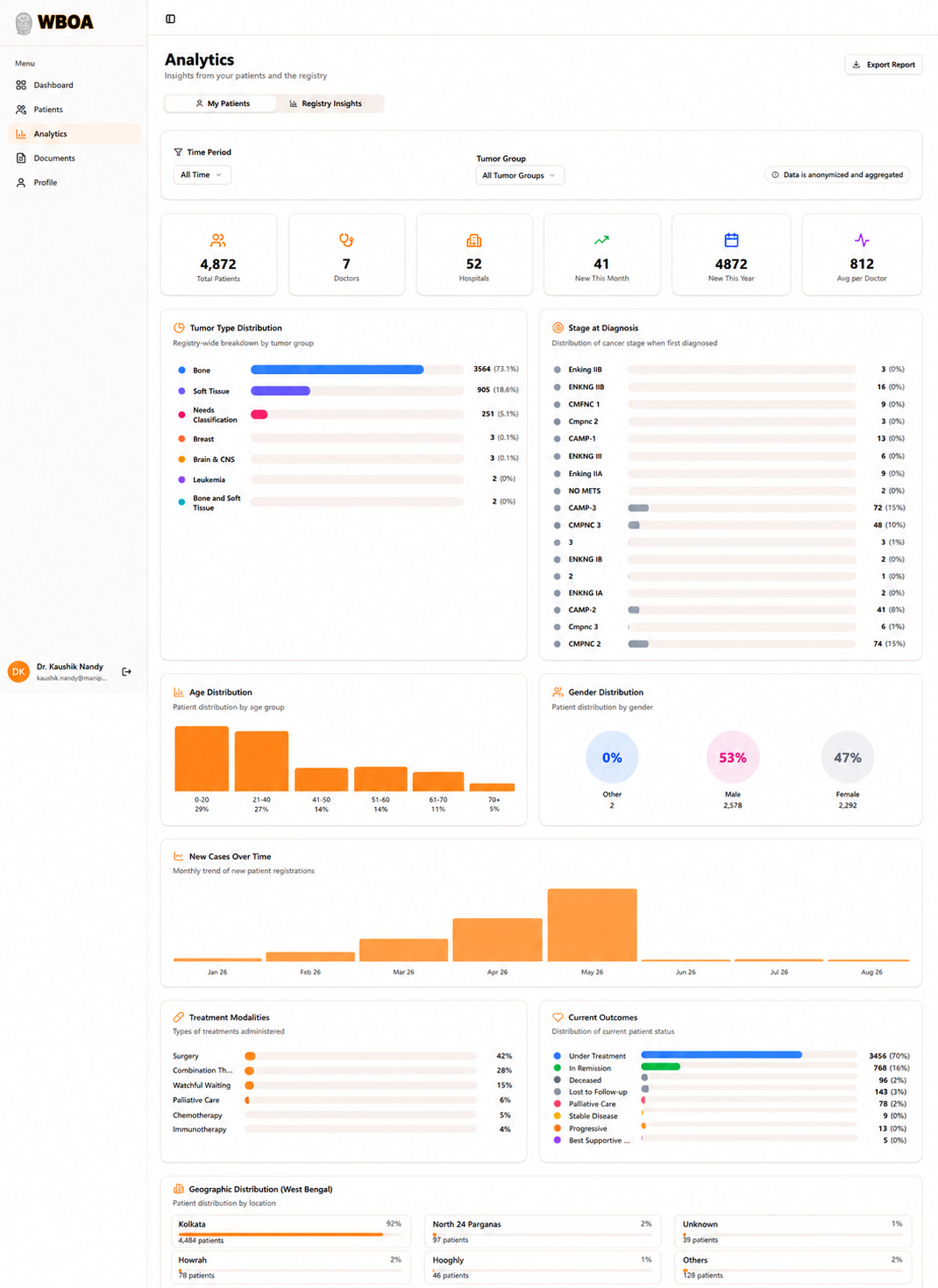
Doctor portal
An anonymised, aggregate view for clinical understanding and research.
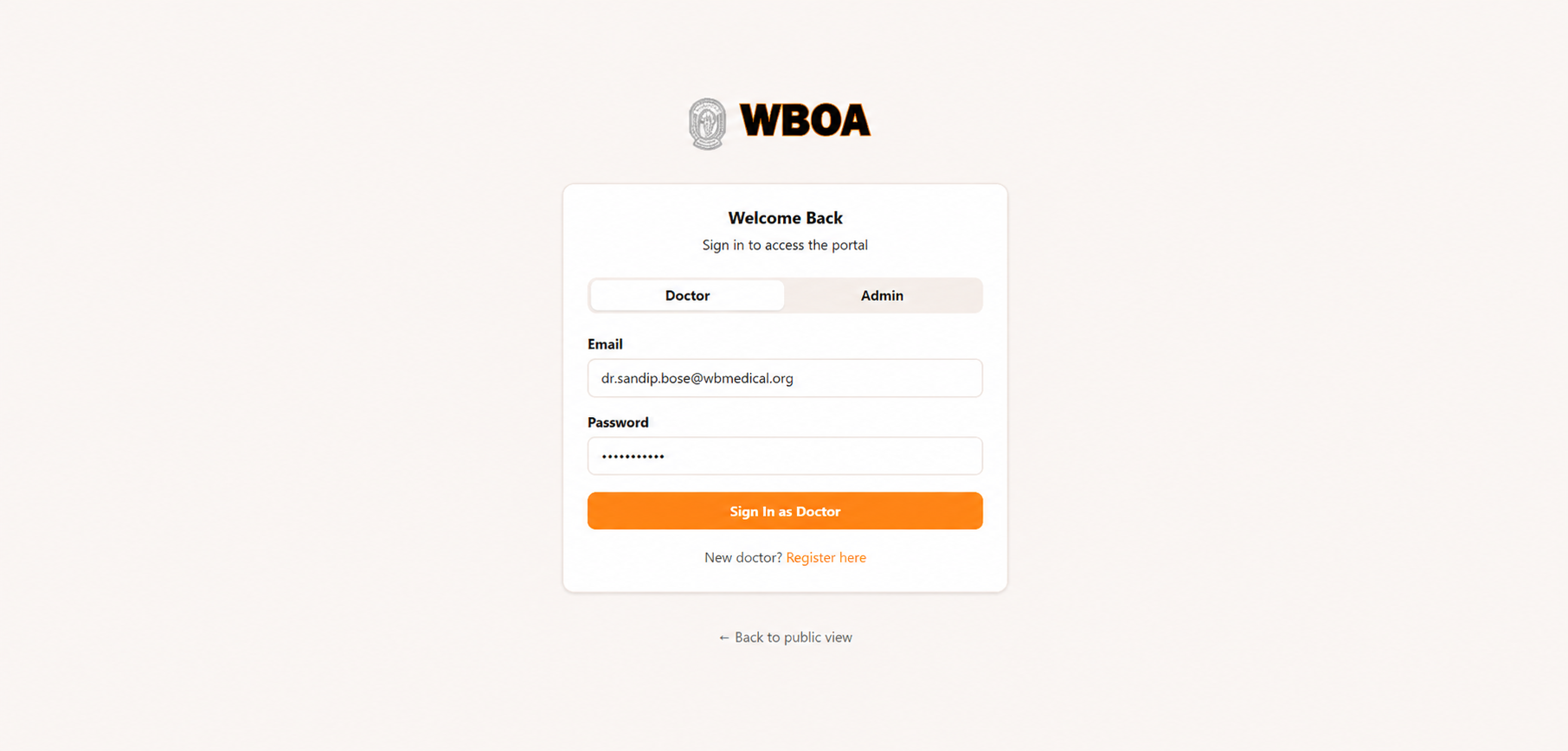
Doctor portal
A clear, role-aware entry point for authorised clinical registry work.
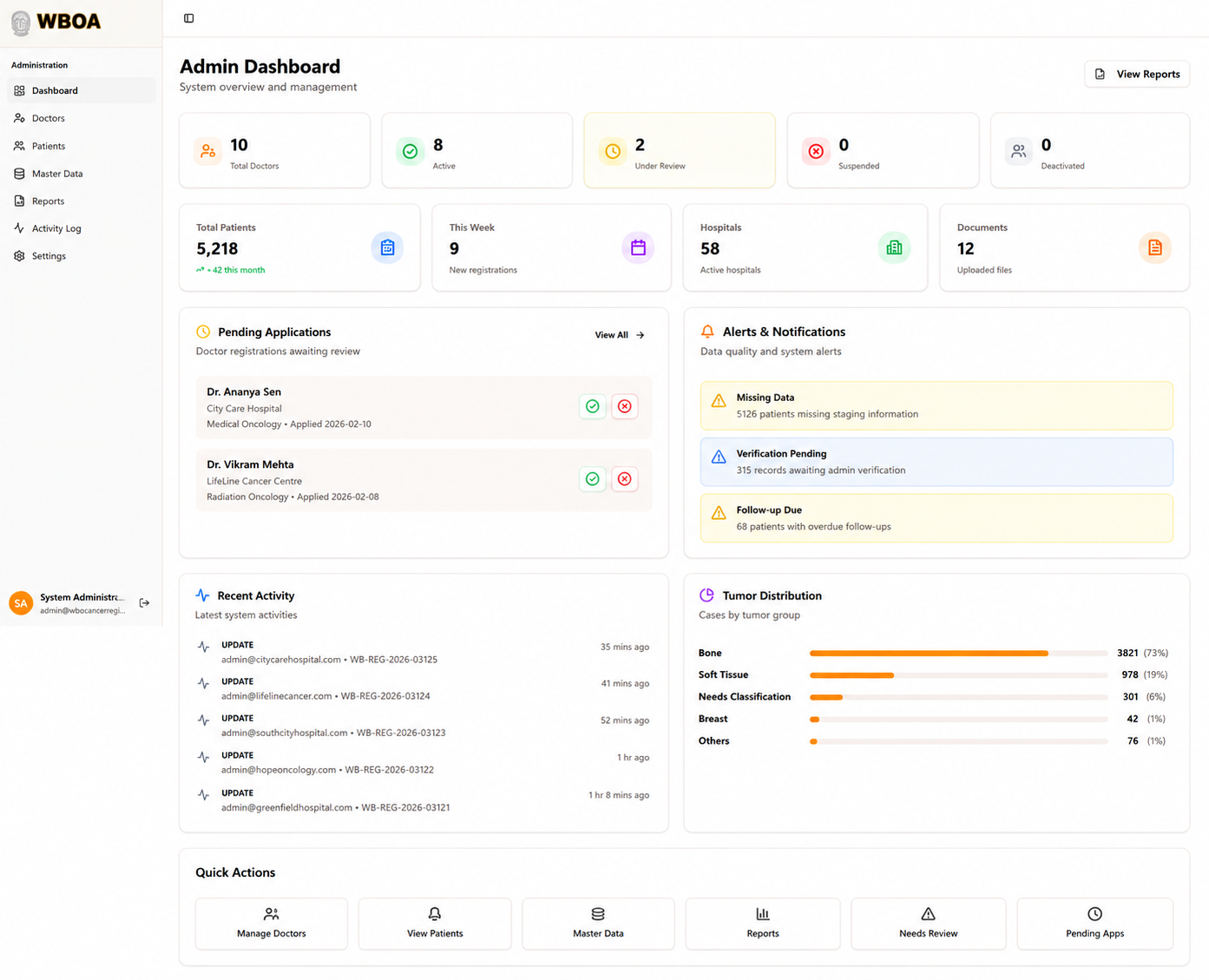
Admin portal
A governance view of applications, records, alerts and hospital participation.
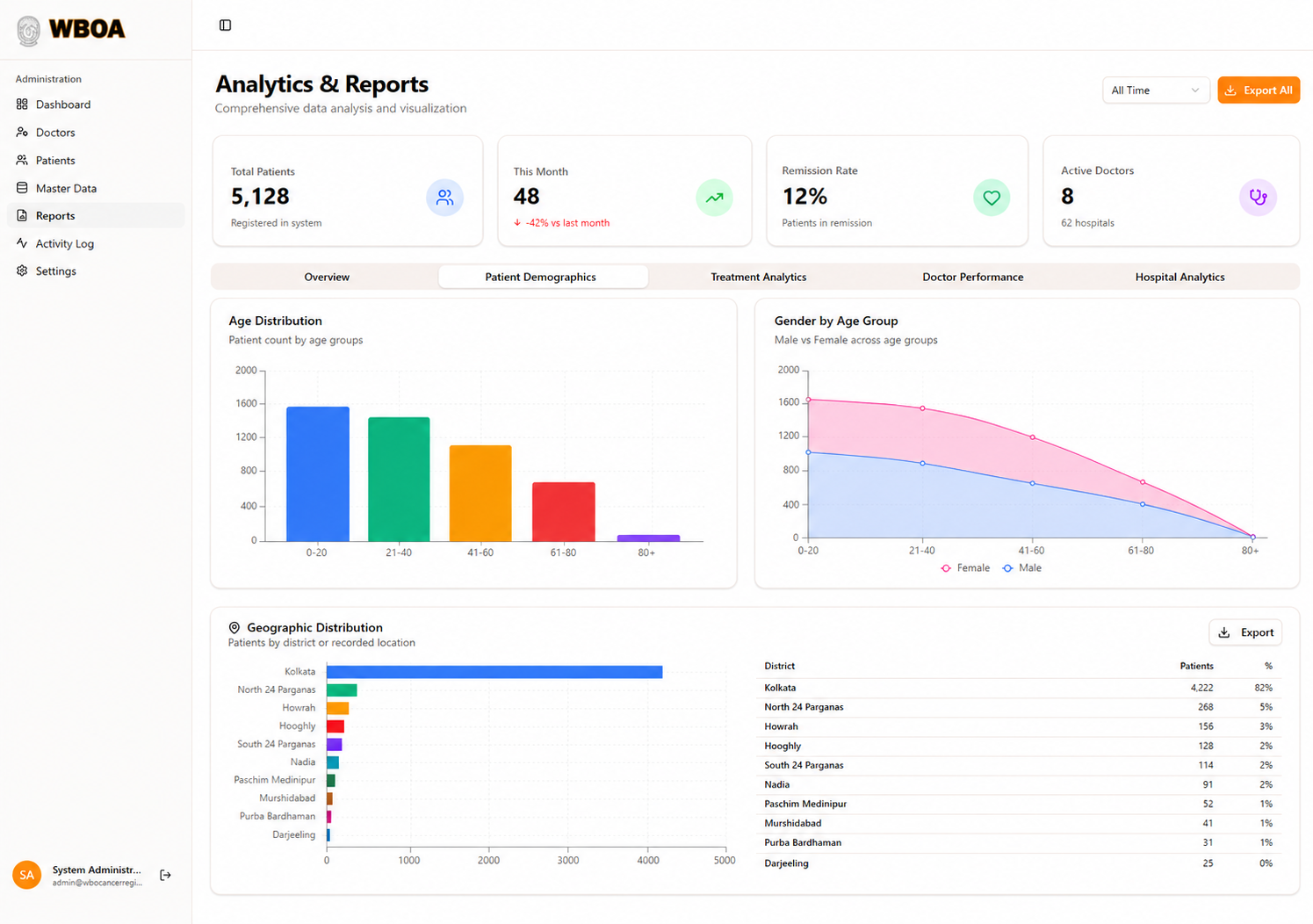
Admin portal
A high-level reporting view for responsible operational oversight.
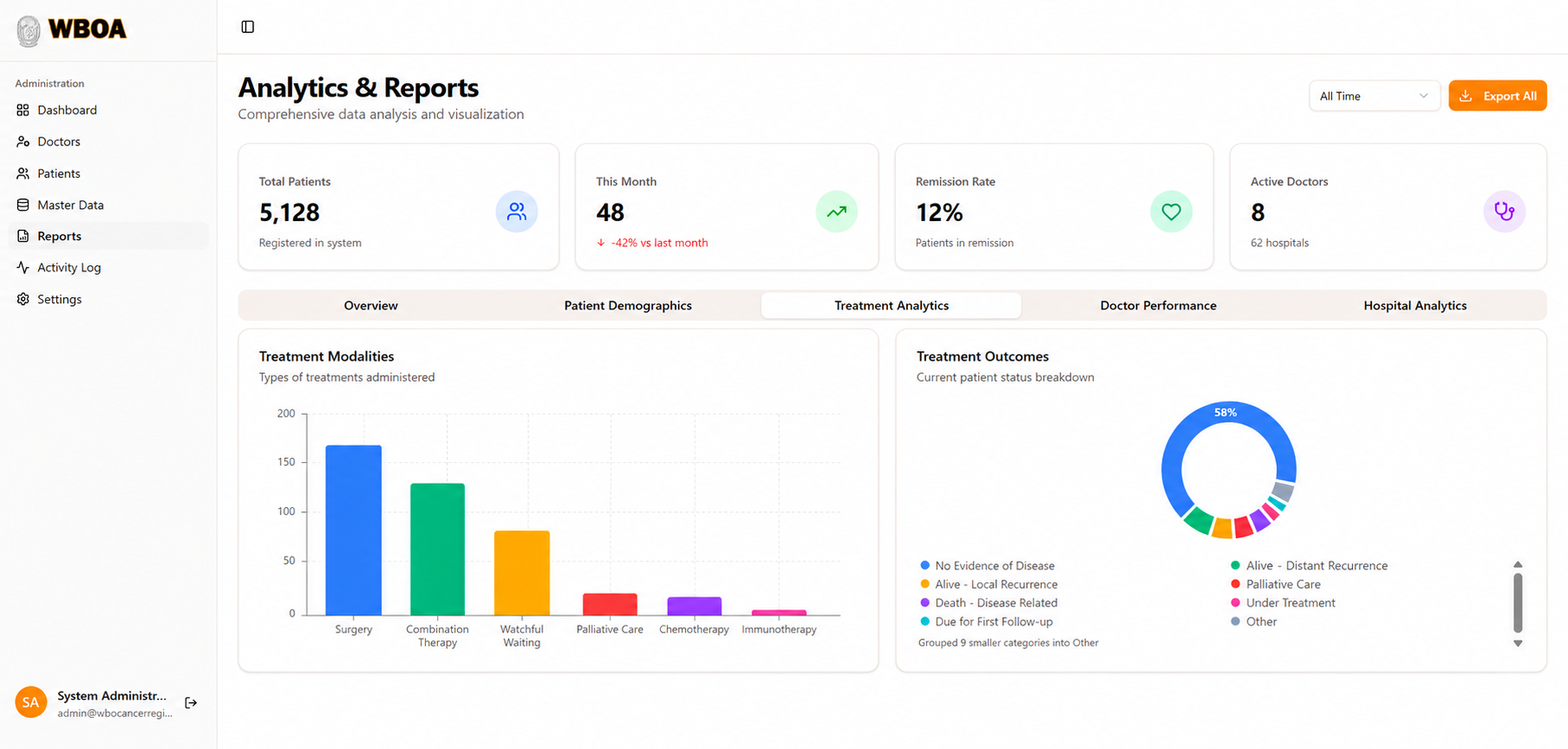
Admin portal
Cohort-level reporting across demographics, diagnosis, treatment and outcome.
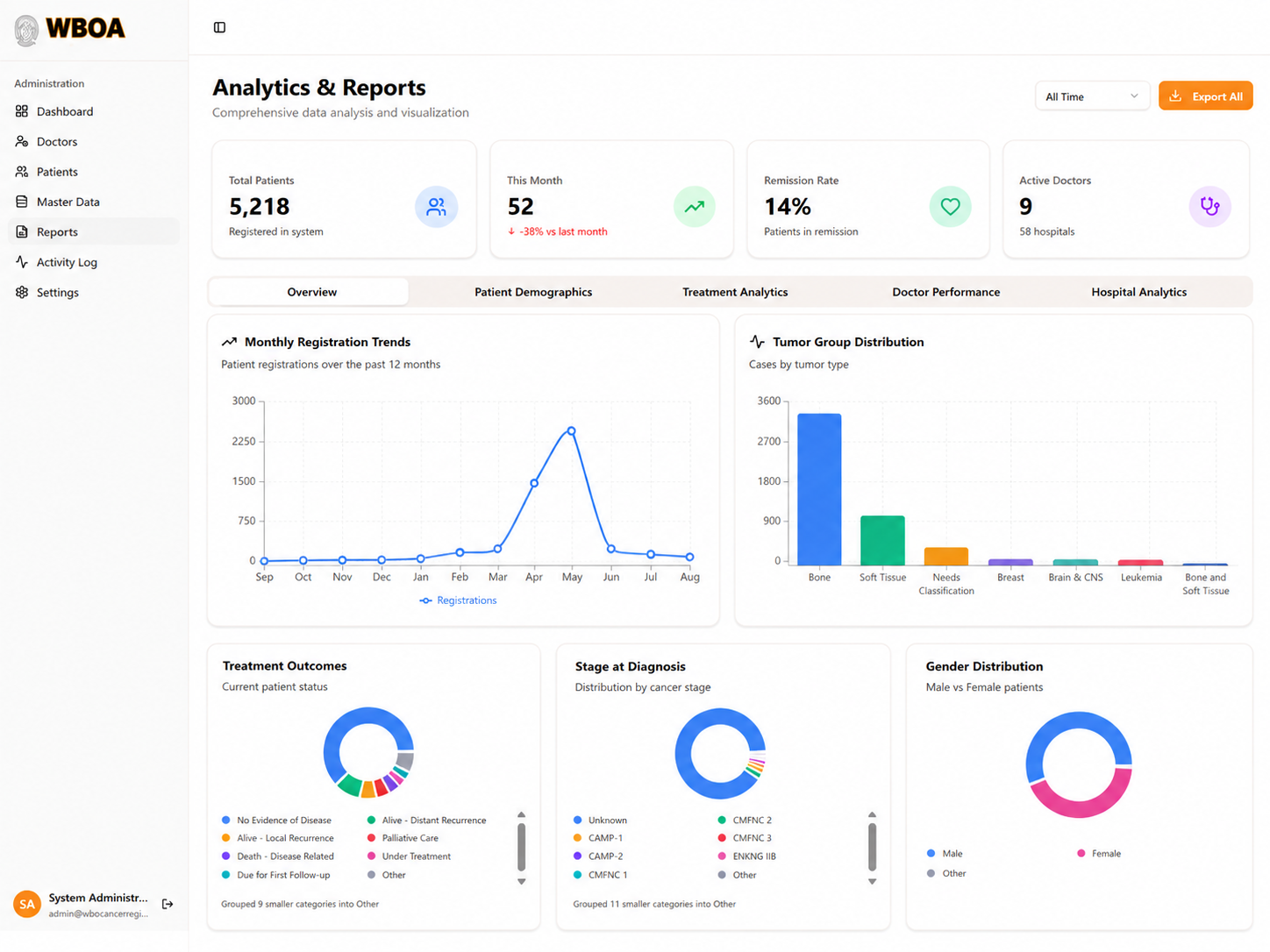
Admin portal
Operational signals that make verification and follow-up work visible early.
Clinical registries only become more valuable with time—if their data remains structured, follow-up stays visible and access remains responsible.
The registry needed a modern way to connect patient records, tumour classification, treatment, outcomes and follow-up without making everyday clinical work feel like a separate administrative burden.
At the association level, WBOA also needed a governed view of registration, data completeness and trends—one that supports research and clinical understanding while keeping identifiable patient information protected.
The registry journey
Now in focus
Patient
A patient record begins with structured clinical details, a treating hospital and the information needed to support continuity of care.
Patient
Diagnosis
Tumour classification
Treatment
Follow-up
Outcome
Clinical intelligence
Creating a patient-first workspace for structured records, treatment details and longitudinal follow-up.
Making doctor onboarding, verification queues and data-quality tasks actionable in one console.
Turning consent-aware registry data into useful cohort, demographic and treatment-pattern insight.
Designing privacy-conscious information architecture for a registry that can support learning over time.
Patient, diagnosis, tumour classification, treatment, follow-up and outcome remain connected in one usable record.
Missing information, verification needs and overdue follow-ups become visible before they weaken the registry.
Aggregated and anonymised analysis supports responsible learning while protecting identifiable patient information.
Hospital participation, clinician activity and registry growth are easier to understand from one administrative view.
The WBOA Portal CRM turns a long-standing registry into an operating layer for more structured care, better visibility and responsible clinical intelligence.
 A structured clinical registry for more than 4,646 patient records across 45 participating hospitals.Longitudinal follow-up makes treatment status and outcomes easier to retain as part of the patient story.Anonymised cohort patterns help WBOA and clinicians explore tumour, diagnosis, treatment and demographic trends responsibly.Administrative quality signals create a more reliable foundation for clinical learning, research and future collaboration.